

-

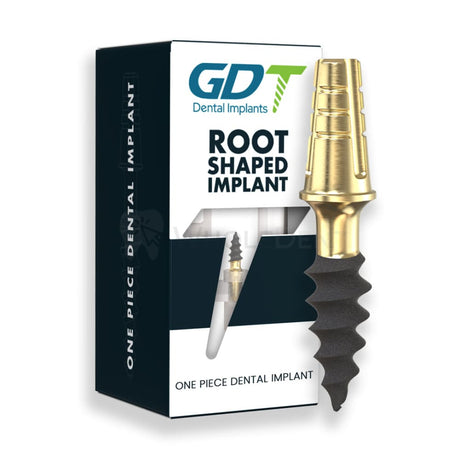
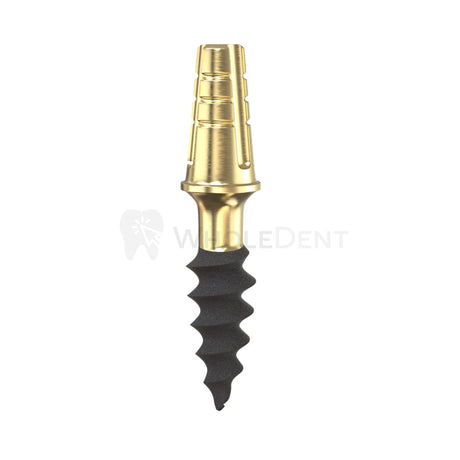
GDT Root Shaped Flexible Neck One Piece Implant
$85.00 as low as $76.50Unit price /Unavailable -
GDT OPIB Flexible Neck One Piece Implant
$85.00 as low as $76.50Unit price /Unavailable -
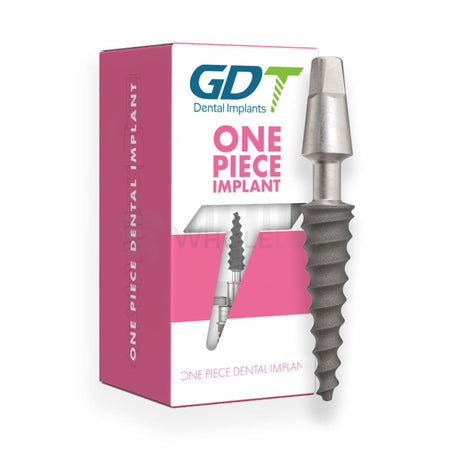
GDT OPI One Piece Implant
$85.00 as low as $76.50Unit price /Unavailable -
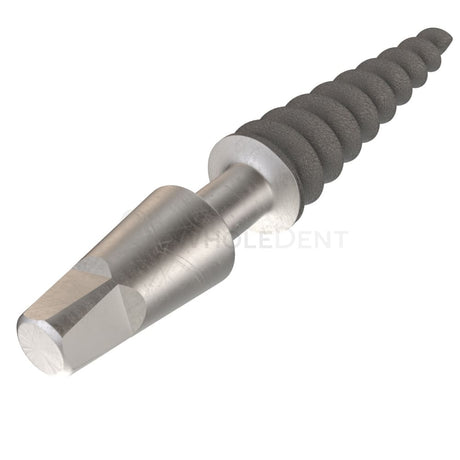
GDT Root Shaped Short Neck One Piece Implant
$85.00 as low as $76.50Unit price /Unavailable -
GDT OPIB Flexible Neck One Piece Implant Set
$110.00 as low as $99.00Unit price /Unavailable -
GDT Long Hand Surgical One Piece Implant Driver
$55.00 as low as $49.50Unit price /Unavailable -
GDT Hex Driver For Root Shaped One Piece Implants
$39.00 as low as $35.10Unit price /Unavailable -
GDT Driver For One-Piece Implant
$17.00 as low as $15.30Unit price /Unavailable -
GDT Driver For Flexible Neck One-Piece Implant
$17.00 as low as $15.30Unit price /Unavailable -
GDT Impression Coping Transfer For One-Piece Implant
$14.50 as low as $13.05Unit price /Unavailable -
GDT Long Hand Surgical Root Shaped One Piece Implant Driver
$55.00 as low as $49.50Unit price /Unavailable -
GDT One Piece Implant Analog
$10.00 as low as $9.00Unit price /Unavailable -
GDT Long Driver For One-Piece Implant
$17.00 as low as $15.30Unit price /Unavailable -
GDT Flexible Neck One Piece Implant Analog
$10.00 as low as $9.00Unit price /Unavailable -
GDT OPI One Piece Implant Set
$110.00 as low as $99.00Unit price /Unavailable


FAQs
One-piece implants are best suited for specific indications where their design provides both surgical and prosthetic efficiency. Ideal scenarios include: - Narrow ridge applications: Their slim, tapered profiles often eliminate the need for ridge augmentation in narrow alveolar ridges. - Immediate placement in fresh extraction sockets: The design allows for high primary stability, especially in anterior mandibular and maxillary sites. - Single-stage protocols: Since there's no abutment connection, one-piece implants allow for flapless or minimally invasive surgery with immediate temporization when primary stability exceeds 35 Ncm. - Thin soft tissue biotypes: The absence of a microgap at the crestal level reduces inflammatory response, supporting soft tissue stability. Clinical Tip: In immediate placements, ensure bicortical stabilization (e.g., engaging the nasal floor or lingual cortical plate) to enhance primary stability for early loading.
One-piece implants lack a detachable abutment, which introduces challenges in prosthetic angulation and restoration. Key considerations include: - No angulation correction: Since the prosthetic head is integral, implants must be placed with precise angulation. Malpositioning cannot be corrected prosthetically. - Limited prosthetic flexibility: Restorations often require chairside adjustments, and cement-retained crowns are the standard. Screw-retained options are typically not viable. - Soft tissue emergence: The emergence profile is dictated by implant placement; aesthetic shaping options are limited. Practical Advice: Use surgical guides for precise positioning and verify angulation with trial placement tools. When working in the esthetic zone, pre-contour provisional restorations to guide soft tissue shaping immediately post-placement.
While one-piece implants reduce the number of components and eliminate the implant-abutment microgap, they also present unique biomechanical properties: - Monolithic strength: The single-component structure avoids screw loosening and minimizes component fracture risks under axial loading. - Stress concentration: Because the implant and abutment are unified, lateral forces can place greater stress at the crestal bone level if not aligned properly. - Bone-level vs. tissue-level: Most one-piece designs are tissue-level, which helps preserve crestal bone but may complicate soft tissue contouring. Clinical Tip: To reduce stress on crestal bone, avoid placing one-piece implants at angles requiring extensive occlusal adjustment. Opt for parallel placement in low-stress zones (e.g., lower anteriors).
Successful one-piece implant placement requires a high level of surgical precision. Consider the following: - Flap design and access: In minimal bone volume, full-thickness flaps improve visibility and allow minor contouring without compromising vascularity. - Drill protocol: Under-preparation of the osteotomy site can enhance primary stability, especially in softer bone. However, excessive compression must be avoided to prevent necrosis. - Soft tissue handling: As the abutment is transgingival, careful flap adaptation and tension-free suturing are essential to prevent dehiscence. Practical Advice: Always pre-plan crown height space and occlusal clearance. In low vertical space cases, verify that the implant head won't interfere with opposing occlusion prior to placement.